
There's a line on every government salary slip that most people glance past without thinking about.
Transport Allowance: ₹5,580
Then below it: DA on TA: ₹XXX
Where do these numbers come from? Why does the amount change every six months? And why is it higher in some cities than others?
Transport Allowance (TA) is one of the few salary components that increases automatically with every DA revision — even without any Pay Commission change. Here's everything behind that number on your slip.
What TA Actually Covers
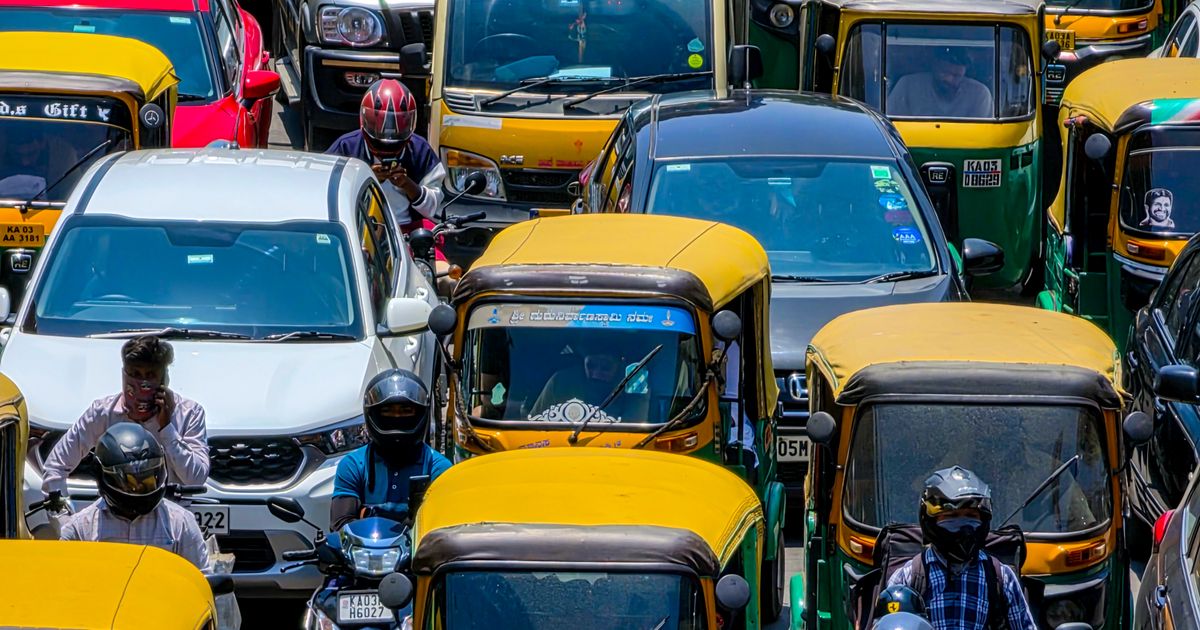
Transport Allowance is a flat monthly amount meant to compensate you for commuting between your home and your office. It's not a reimbursement — you don't submit fuel bills or auto receipts.
You get the same amount whether you walk 500 metres to the office or commute 25 kilometres by bus. The government decided that a flat allowance is simpler and fairer than trying to track actual commuting costs.
This was rationalised by the 7th Pay Commission effective 1 August 2017, per OM No. 21/5/2017-E.II(B).
Current TA Rates (7th CPC)
| Pay Level | TPTA Cities | Other Cities |
|---|---|---|
| Level 9 and above | ₹7,200 + DA | ₹3,600 + DA |
| Level 3 to 8 | ₹3,600 + DA | ₹1,800 + DA |
| Level 1 and 2 | ₹1,350 + DA | ₹900 + DA |
How the DA component works: The base TA rate is fixed. But on top of that, the current DA percentage is applied to the base TA. So your total TA = Base TA + (DA% × Base TA).
Example: Level 7 in Delhi, DA at 60%:
TA = ₹3,600 + (60% × ₹3,600) = ₹3,600 + ₹2,160 = ₹5,760/month
When DA goes up to around 62% in the July 2026 revision, your TA will automatically increase too — without any separate order.
What Are TPTA Cities?
TPTA stands for "Transport Planning and Transport Authority" cities — the 12 large urban centers where commuting costs are significantly higher. Employees posted here get double the TA rate compared to other cities.
The 12 TPTA cities are:
- Mumbai
- Delhi (NCR)
- Chennai
- Kolkata
- Bengaluru
- Hyderabad
- Ahmedabad
- Pune
- Surat
- Kanpur
- Jaipur
- Lucknow
Being posted in one of these cities automatically entitles you to the higher TA rate.
Higher TA for Differently-Abled Employees
Employees with locomotor or visual disabilities get TA at double the normal rate, with minimum amounts:
- ₹1,000/month in non-TPTA cities
- ₹2,000/month in TPTA cities
When TA Is Not Payable
TA has specific conditions under which it stops:
| Situation | What Happens |
|---|---|
| On leave beyond 30 days | TA stops from the 31st day |
| On outstation tour/duty | TA stops for the tour period |
| Living in government quarters within 1 km of office | TA not admissible |
| On suspension | TA payable at half rate |
| During joining time after transfer | Not payable |
| On training (if training allowance is paid) | Subject to specific orders |
The most common scenario: you're on long medical leave or EOL. If it crosses 30 days, TA stops. It resumes when you return to duty.
How TA Shows Up on Your Salary Slip
Your slip will show two separate lines:
- Transport Allowance — the base amount (e.g., ₹3,600 for Level 7 non-TPTA)
- DA on TA — the DA percentage applied to the base TA (e.g., ₹2,160 at 60% DA)
Both add up to your effective monthly TA.
TA and Tax
Under the Old Tax Regime, TA is exempt up to ₹1,600/month (₹19,200/year) under Section 10(14). Anything above ₹1,600/month is taxable.
Under the New Tax Regime, TA exemption is not available. The ₹75,000 standard deduction replaces it in concept, but there's no separate TA exemption.
Note: At Level 9+ in a TPTA city, TA is ₹7,200 base + DA on TA. Even after the ₹1,600 exemption, a substantial portion is taxable.
What Will Change Under the 8th CPC?
The 8th CPC is expected to revise base TA rates upward — roughly in line with the overall fitment factor. The 7th CPC roughly doubled TA rates from the 6th CPC. A similar revision is expected.
The TPTA city list may also be reviewed. Several cities that weren't on the list in 2017 have grown into major urban centers since then.
Pros of the Flat TA System
- ✅ No paperwork — no fuel bills, receipts, or claims
- ✅ Automatically increases with every DA revision
- ✅ Higher rates for high-cost urban postings (TPTA cities)
Cons
- ❌ Flat rate benefits shorter commuters disproportionately
- ❌ TA exemption largely irrelevant in New Tax Regime
- ❌ Stops during long leave — at the exact time you might need it most
