
📊 8th Pay Commission Latest News
Track every 8th Central Pay Commission development in one place. We break down the fitment factor, expected pay matrix, implementation timeline and each DA hike into plain rupee terms — with calculators to work out your own numbers.

8th Pay Commission OPS Restoration: What ToR Says
8th Pay Commission OPS restoration is not part of its official mandate. Here is what the gazette ToR actually covers on NPS, UPS and pension.

Kota Hostel for Ex-Servicemen Daughters 2026-27: Fees, Apply
Kota hostel for ex-servicemen daughters is now open for the 2026-27 session at Rs 800/month. Check eligibility, fees, and how to apply here.

Railway Relaxes Wagon Rule for Military Trains: 20 vs 30
Railway Board has relaxed the minimum wagon requirement for military mixed trains from 30 to 20 bogies for one year. Here's what changed and why.

Group C Postal Staff Must Now File AIPR by 31 Jan 2027
Department of Posts extends Annual Immovable Property Return (AIPR) to Group C employees. Deadline is 31 January 2027. Here's what you need to know.

House Building Advance Interest Rate FY 2026-27: What Railway Staff Should Know
Railway Board confirms 7.10% interest on House Building Advance for FY 2026-27. Here's what that actually means for your home loan repayment.
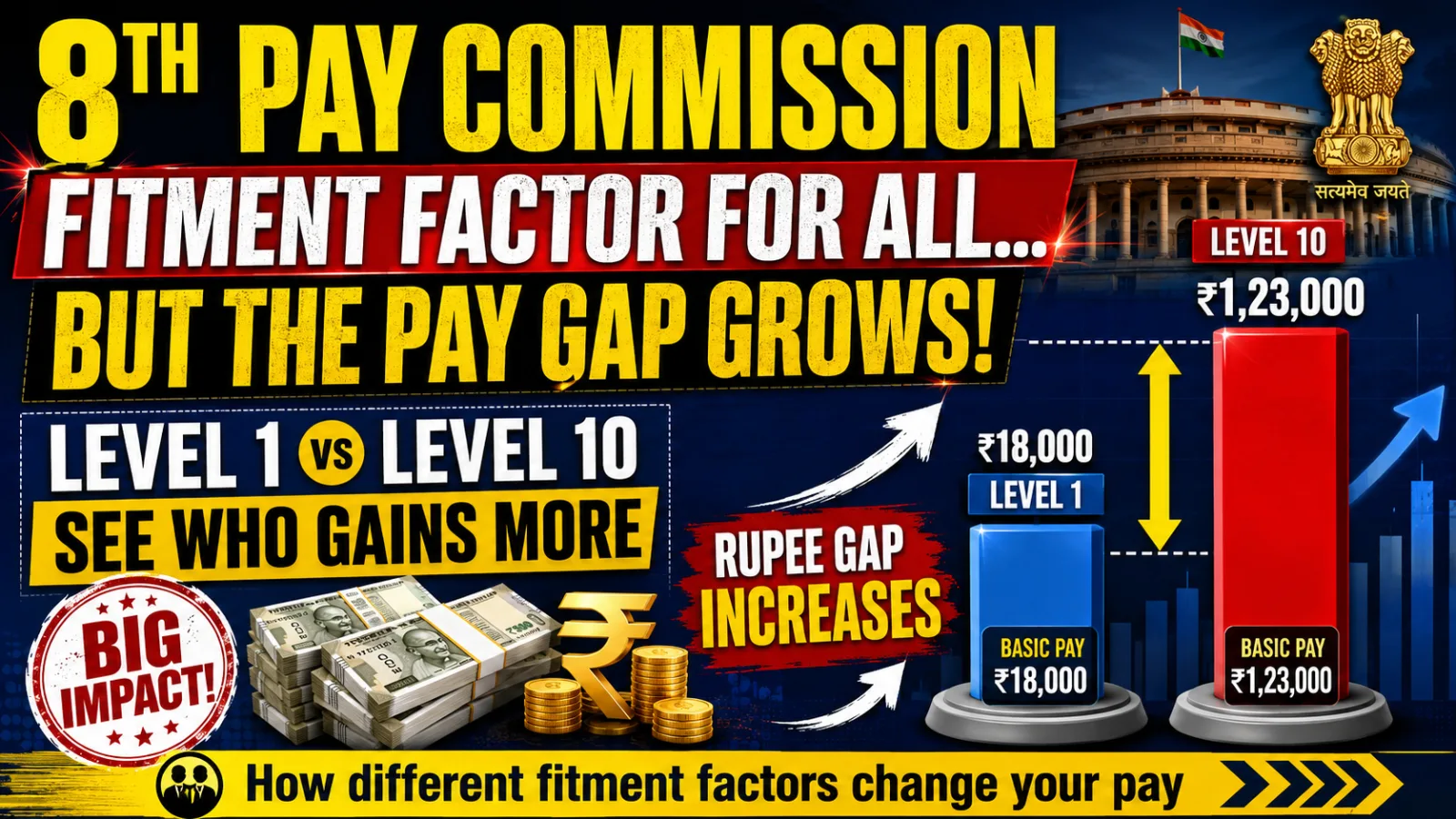
8th Pay Commission: How Fitment Factor Widens Salary Gap for Level 1 vs Level 10
The 8th Pay Commission's fitment factor applies to everyone, but the rupee gap between Level 1 and Level 10 salaries will actually grow, not shrink. See how different factors impact your pay.
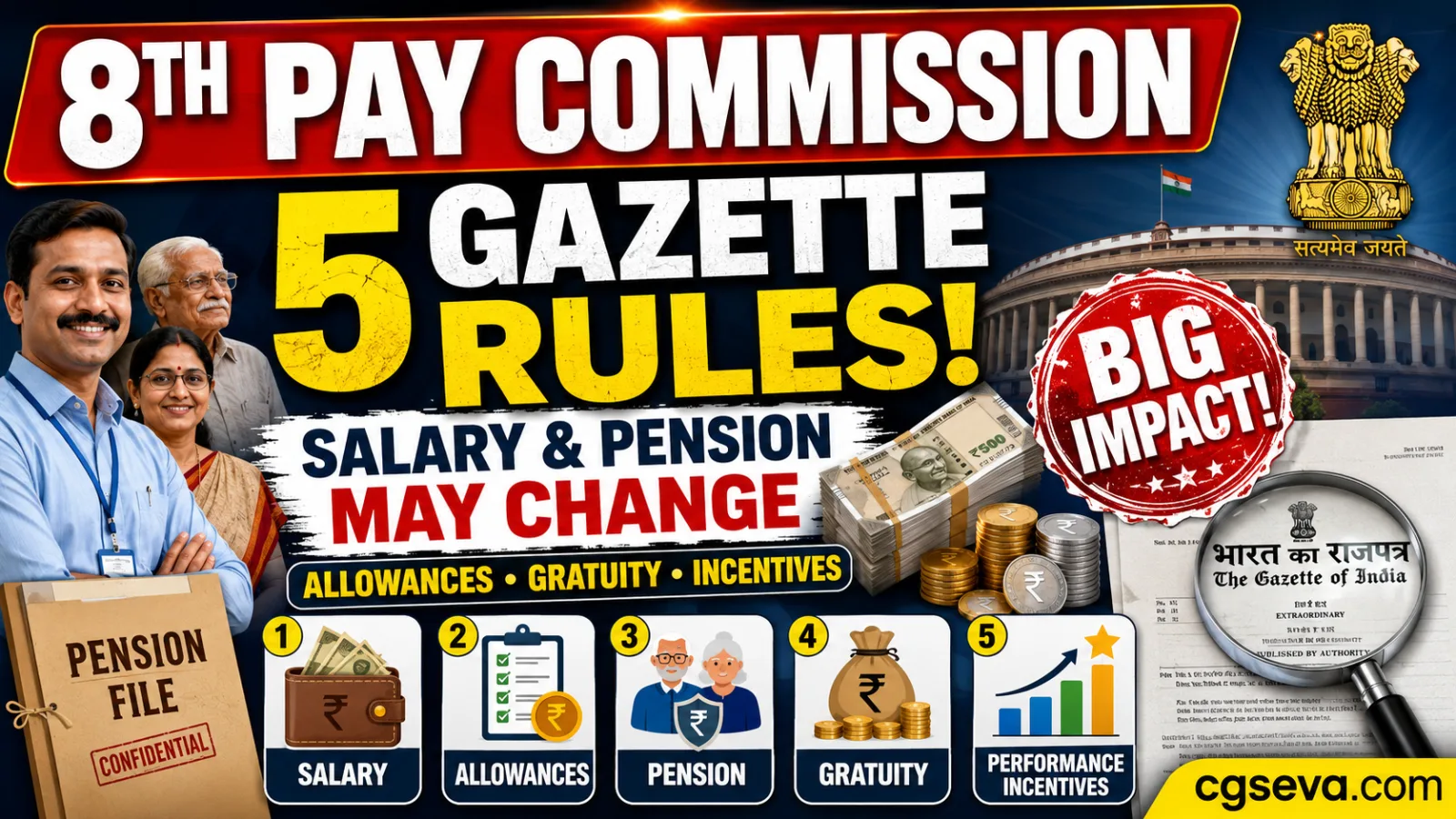
8th Pay Commission: 5 Gazette Rules That Could Change Your Salary and Pension
Discover the 5 most important Gazette provisions of the 8th Pay Commission that could affect salaries, allowances, pensions, gratuity and performance incentives for lakhs of Central Government employees and pensioners.

8th Pay Commission Kolkata Meeting: 5 Demands Employees Are Pushing For
The 8th CPC's Kolkata meeting on 9-10 July 2026 raised 5 big demands - Professional Tax exemption, pension parity, equal fitment factor, 6% increment, and more.
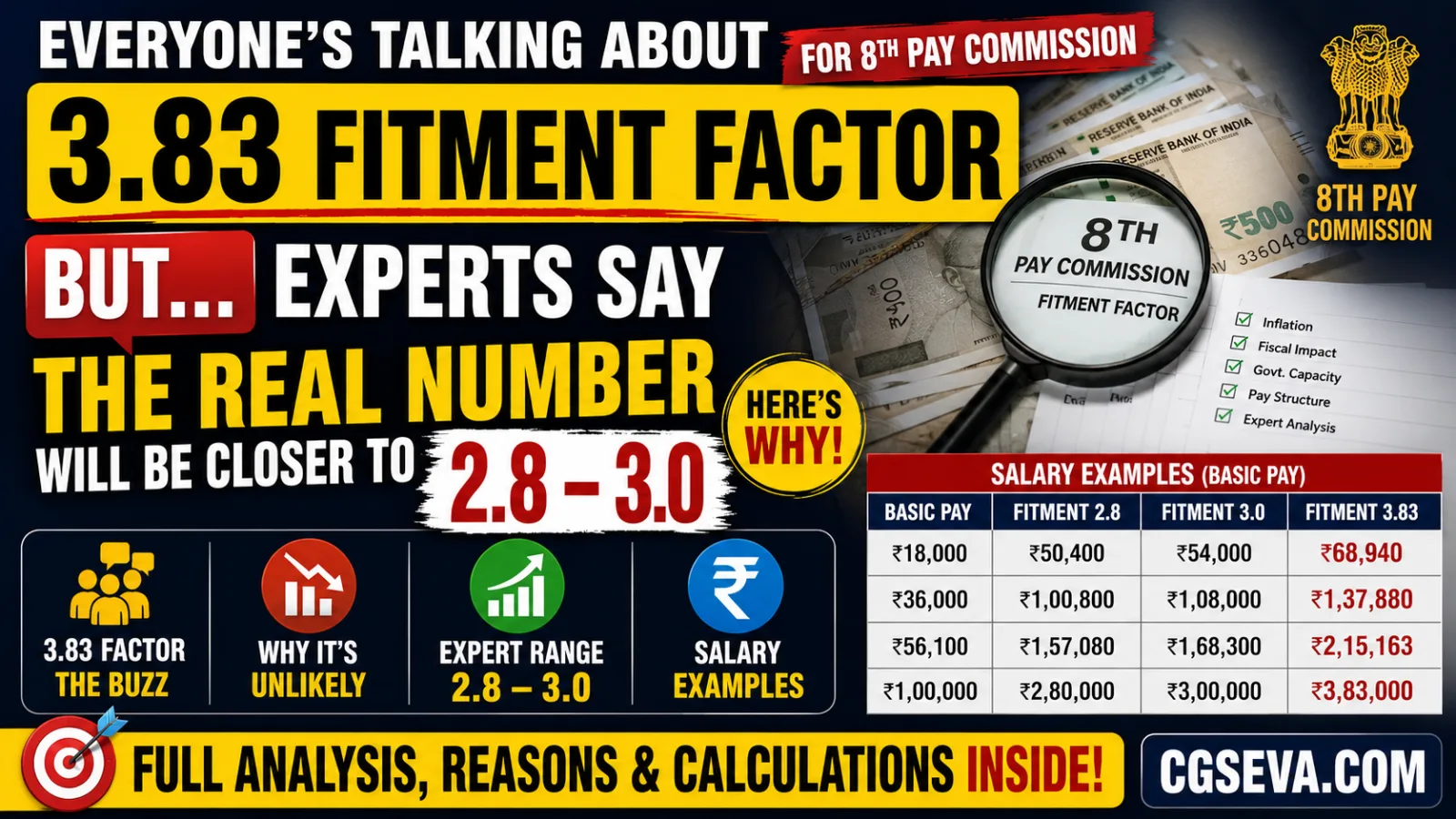
8th Pay Commission Fitment Factor: Real Number May Be 2.8-3.0, Not 3.83
Everyone's talking about a 3.83 fitment factor for the 8th Pay Commission. Here's why experts think the real number will land closer to 2.8-3.0, with salary examples.

"8th Pay Commission Data Submission Deadline: July 31"
The 8th Pay Commission data submission deadline is extended to 31 July 2026. Check the Data Collection Portal, who must submit, the process and what it means for you.
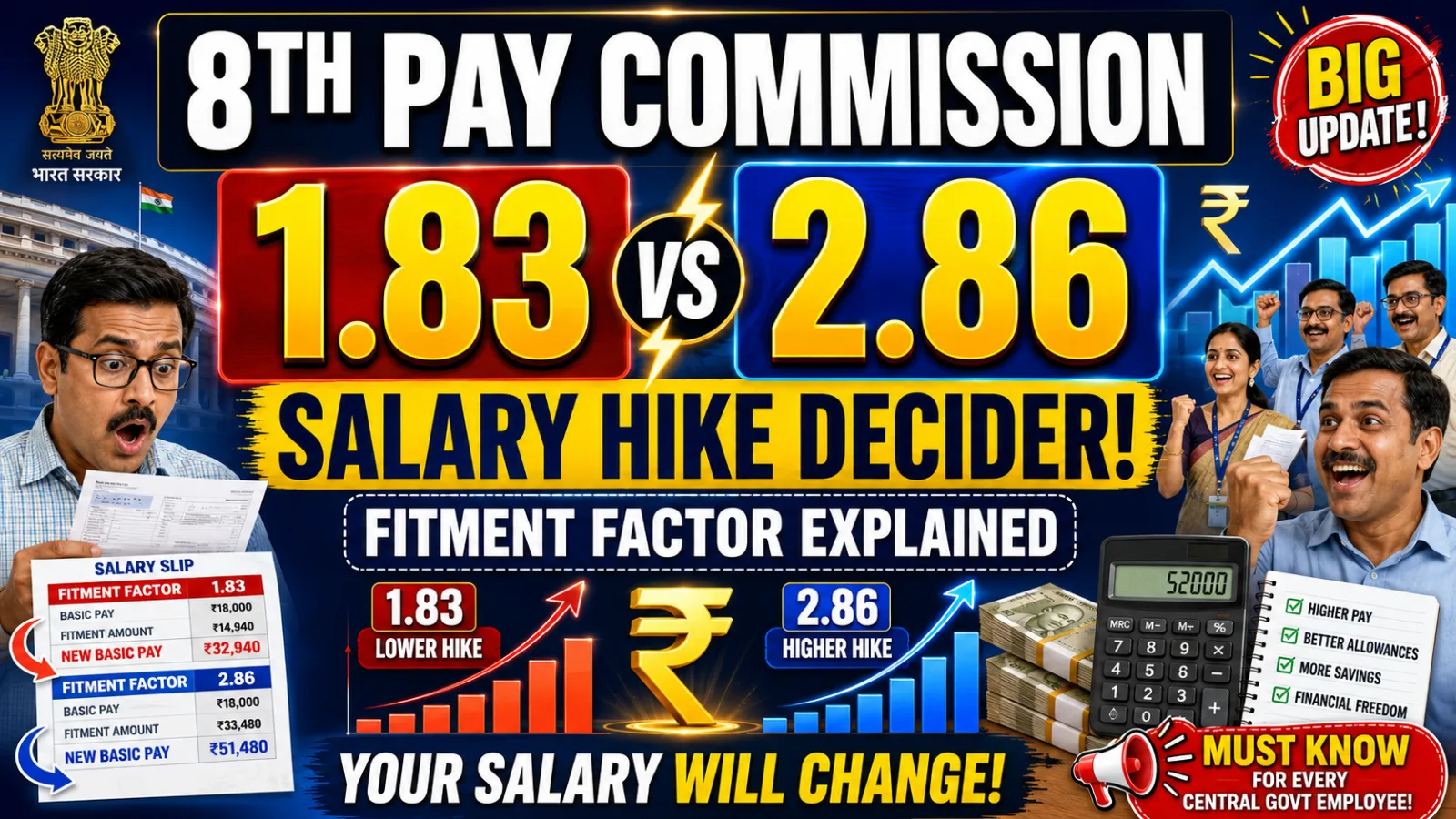
"8th Pay Commission Fitment Factor: 1.83 vs 2.86 Explained"
The 8th Pay Commission fitment factor decides your salary hike. Government estimates run 1.83 to 2.86 while unions want 3.83 — here's what each does to your pay.
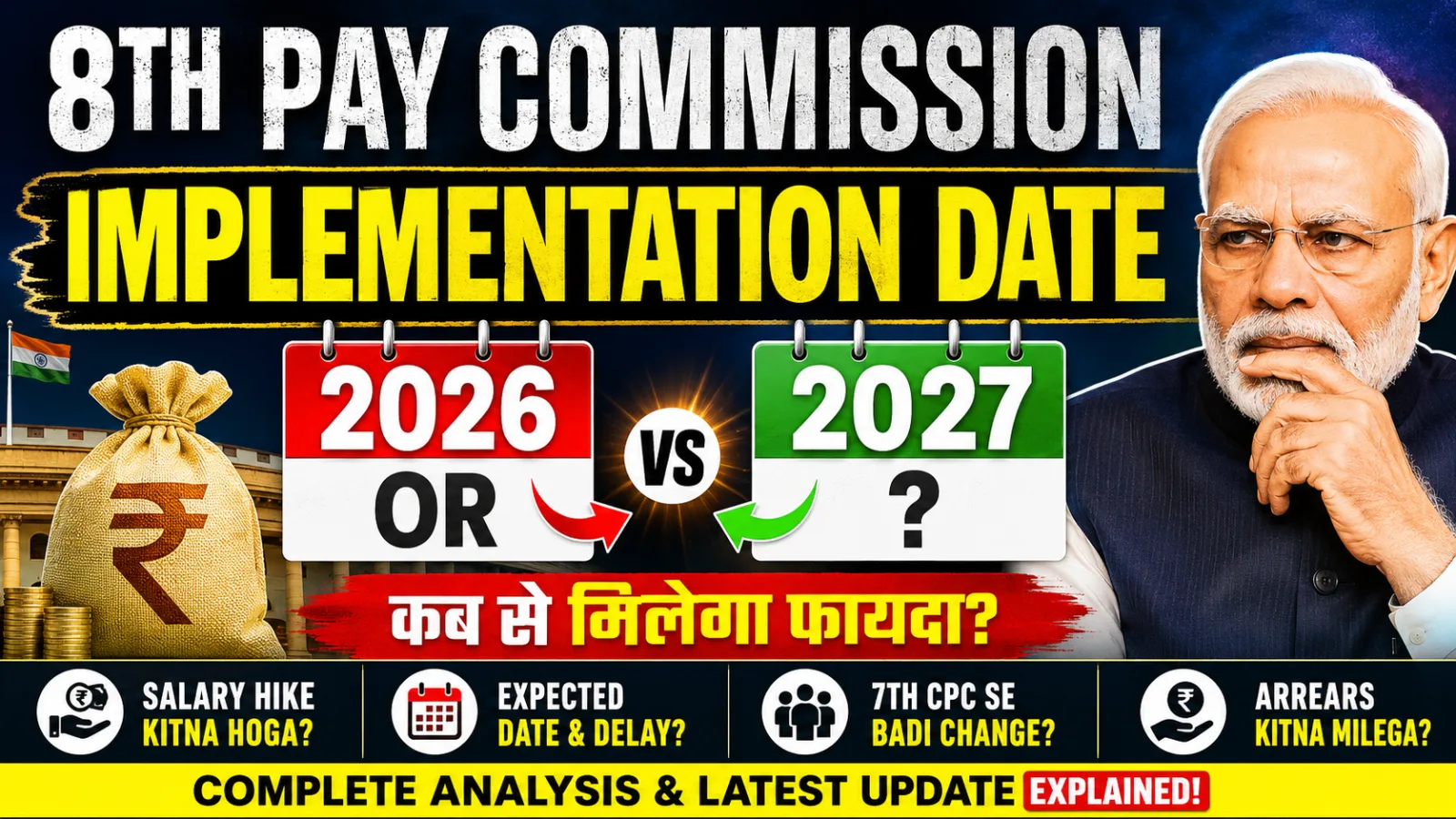
"8th Pay Commission Implementation Date: 2026 or 2027?"
Will the 8th Pay Commission implementation date be 2026 or 2027? The realistic timeline, why arrears are backdated to January 2026, and the tax angle explained.
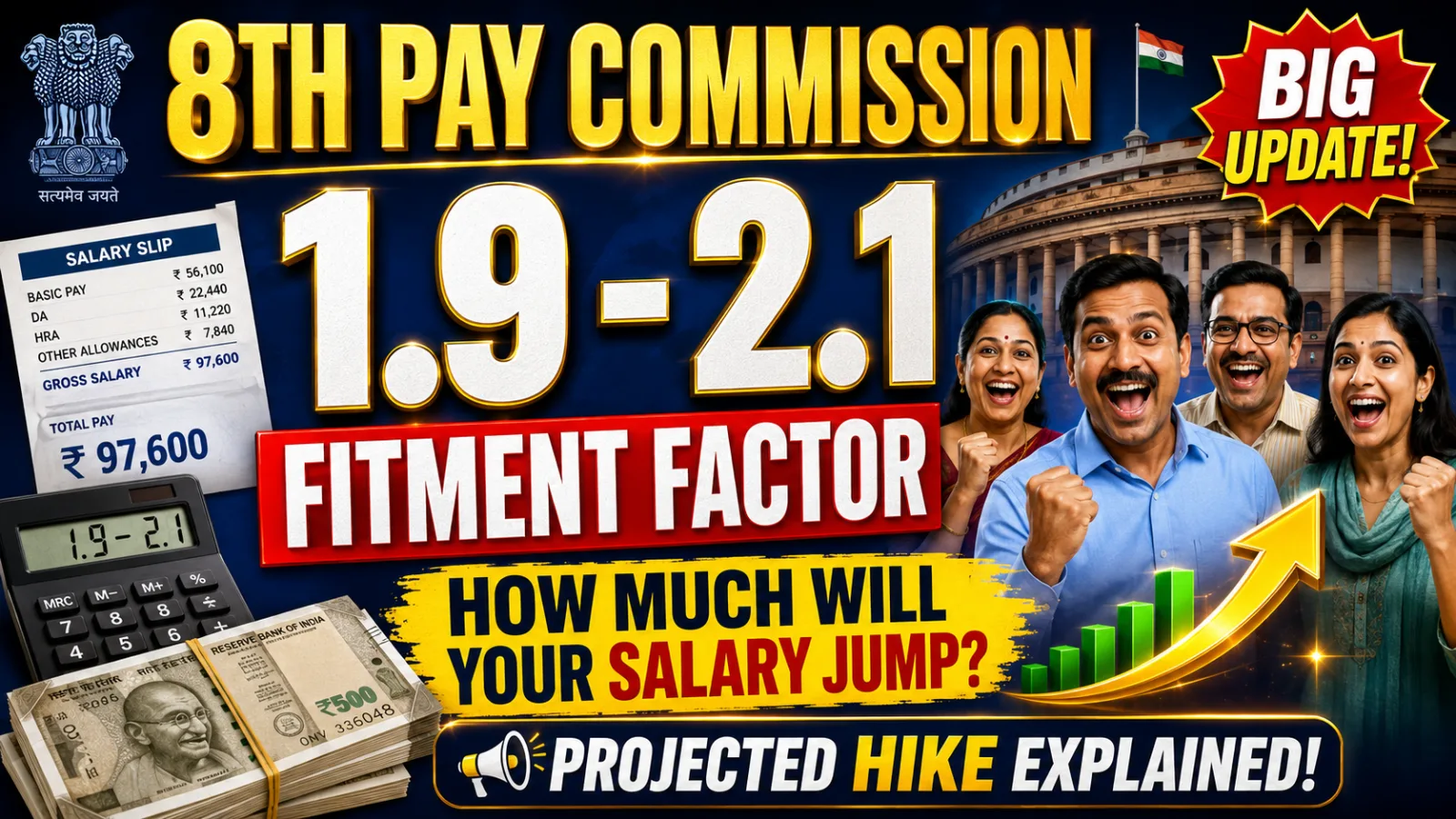
8th Pay Commission: What a 1.9-2.1 Fitment Factor Projection Means for Your Salary
Experts are projecting a lower fitment factor for the 8th Pay Commission, possibly in the range of 1.9 to 2.1. Understand what this could mean for your future basic pay and financial planning.
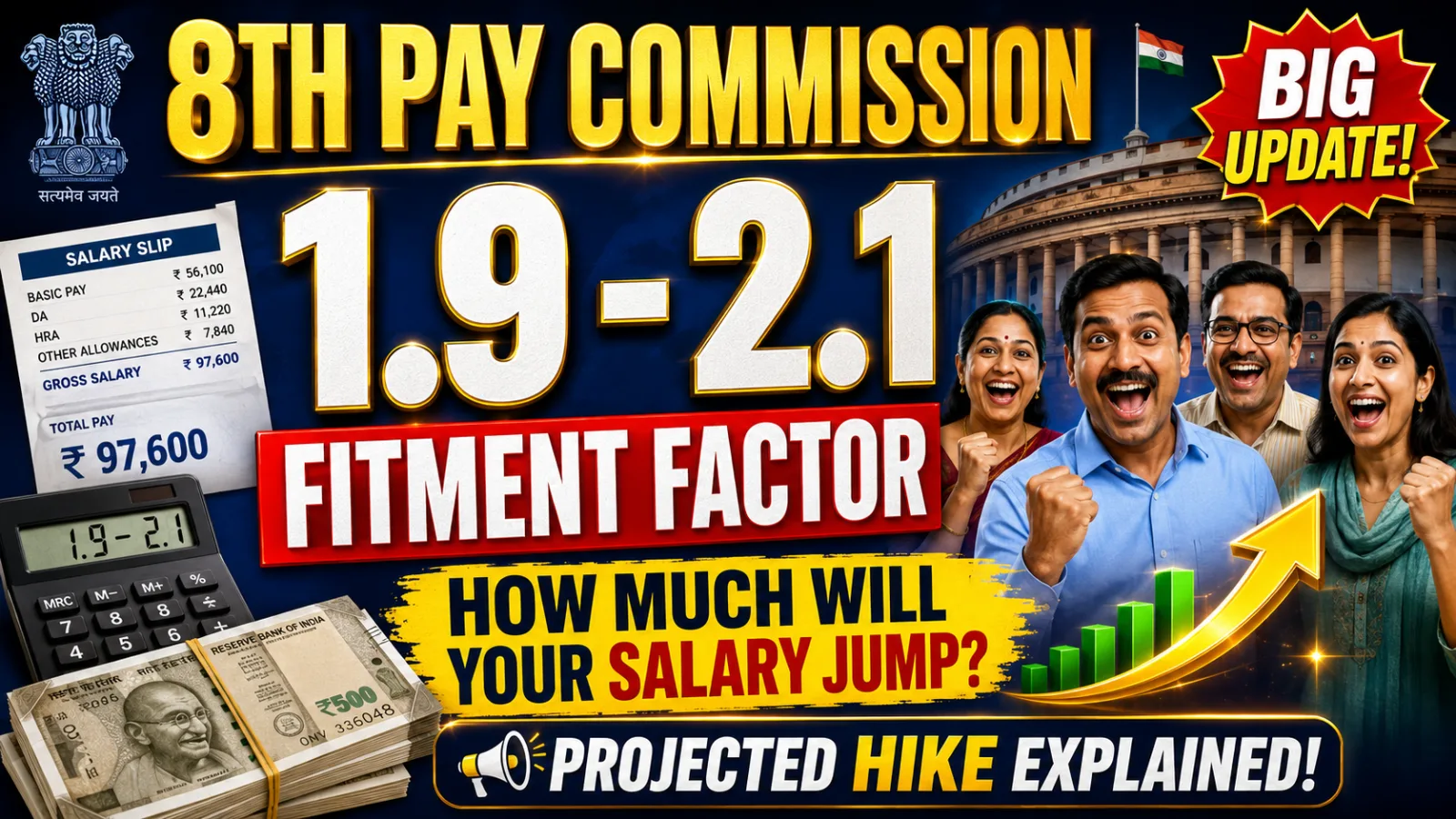
8th Pay Commission: What a 1.9-2.1 Fitment Factor Projection Means for Your Salary
An expert projects the 8th Pay Commission's fitment factor could be between 1.9 and 2.1. Understand what this range means for your salary and how it compares to past pay commissions.

8th Pay Commission Update 2026: Salary Hike Expected for 1.24 Crore Employees — DA Increase Coming in September
Big news for Central Government employees! The 8th Pay Commission is accelerating salary revision talks, and a DA hike announcement is expected in September 2026. Here is everything on fitment factor, minimum basic pay, pension reforms and how much more you could earn.

Top 5 Expected Changes from the 8th Pay Commission: What They Mean for Your Salary & Pension
Understand the anticipated revisions in fitment factor, pay matrix, DA merger, allowances, and pension under the 8th Pay Commission and how they could impact your financial future.
8th Pay Commission and State Employees: Will Your State Pay It Too — and When?
The 8th Central Pay Commission applies to Central Government staff — but most states adopt it with a lag. Here is exactly how state adoption works, the typical delay, and what decides your timeline.
8th CPC Expected Implementation Date: What the Timeline Really Looks Like
When will the 8th Pay Commission actually pay out? A realistic timeline based on every past pay commission — constitution, report, notification and arrears — and why January 2026 is the likely effective date even if payment comes later.
8th Pay Commission — what we know so far
What the 8th Pay Commission is and when it starts
The 8th Central Pay Commission will revise the pay, allowances and pension of Central Government employees and pensioners, as happens roughly every ten years. The commission has been announced; on past cycles the recommendations take effect about a year after the commission begins its work, so the widely expected implementation is from 1 January 2027, with arrears from the effective date. Until the report is out, every figure — including the fitment factor — is a projection, so treat "8th pay commission latest news" as tracking developments rather than final numbers.
The fitment factor — the number that decides your hike
The single most important figure in the 8th CPC is the fitment factor: the multiplier applied to your current basic pay to arrive at the new one. Analyst consensus centres on about 1.92×, though staff-side unions have demanded more. The factor is derived from the need-based minimum wage — see the Aykroyd formula for how that minimum is built. Model any factor against your own pay with the fitment factor calculator.
What actually changes on implementation
On day one of the new commission:
- New basic = old basic × fitment factor — a significant one-time jump.
- DA resets to 0% — accumulated DA (perhaps 64–66% by then) is merged into the new basic, exactly as happened in 2016.
- HRA and Transport Allowance recalibrate to the new, higher basic.
- Pension and NPS/GPF bases rise because basic rises.
Crucially, your gross pay does not collapse when DA resets — the higher basic offsets it, and the visible windfall is the arrears for the gap between the effective date and actual payout.
8th CPC vs 7th CPC
The 7th CPC used a fitment factor of 2.57× and introduced the pay-matrix structure. The 8th CPC is expected to keep the matrix and apply a fresh fitment factor to it. For a side-by-side of what changes and what stays, read 7th CPC vs 8th CPC.
Project your own 8th CPC salary
Rather than wait for headlines, put your current level and basic pay into the 8th CPC salary calculator to see a projected in-hand figure, or the 8th CPC pay matrix to see the whole table at the expected fitment.
Calculators for this topic
Frequently Asked Questions
Install CG Seva for the full experience
Calculators, leave tracker, document vault, retirement countdown, official orders and AI Assistant — built specifically for Indian Central Government employees.
- Ad-free experienceThe web shows ads to keep calculators free. Inside the app — zero ads, ever.
- Offline calculatorsRun pay slip, DA, HRA and pension calculations even with no signal.
- Push alerts for ordersGet instant notifications the moment dopt.gov.in publishes a new order.
- Document vaultStore APAR, payslips, posting orders securely — encrypted and offline-accessible.